
Hypertension
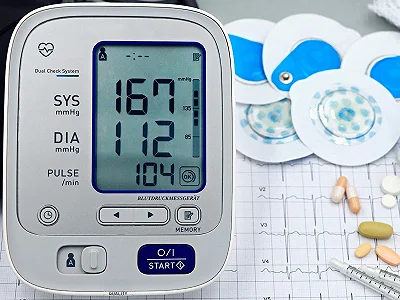
When blood vessels inside the body are subjected to constant, excessive pressure, it leads to a slow wear and tear of the entire circulatory system. If you do not notice in time that the body is working at the limit of its capabilities, the main vital centers – the heart and brain – will suffer. That is why timely diagnostics in a qualified medical center is so important.
What is hypertension
Hypertension is a condition in which blood exerts too much pressure on the walls of large blood vessels from the inside. Doctors begin to sound the alarm if, during several measurements on different days, the blood pressure monitor stubbornly shows values above 140 over 90.
In this situation, the heart has to make a tremendous effort to push blood through narrowed and tight vessels. As a result, the entire system works to exhaustion, trying to deliver oxygen to cells while overcoming the resistance of constricted capillaries.
Hypertension causes
In the medical community, hypertension causes, which only doctors can precisely identify, are divided into two categories: a primary disorder in the body (essential form) and a consequence of damage to a specific organ (secondary form). The first option is the most common, where the body itself begins to maintain high pressure due to a whole range of external and internal factors.
The main causes of constant vascular overload include:
- Genetic factor. If relatives had pressure problems, the risk of encountering them increases due to innate structural features of the vascular walls.
- Excess weight. Every extra kilogram forces the body to create kilometers of new small vessels, causing the heart to pump larger volumes of fluid.
- Lack of physical activity. Without movement, muscles stop helping veins and arteries pump blood, leading to congestion and loss of vascular tone.
- Constant stress. Regular surges of adrenaline and cortisol cause arteries to narrow, keeping the circulatory system in a state of round-the-clock readiness.
- Lack of night rest. During deep sleep, the nervous system regenerates and pressure naturally drops, but without proper rest, this protective mechanism breaks down.
- Cigarette smoking. Nicotine and toxic tars cause an immediate spasm of the arteries right after a puff, and over time physically destroy and thin their delicate inner lining.
- Hidden kidney problems and filtration disorders. When kidney filters cannot cope with removing excess fluid, they release special hormones into the blood that forcibly raise blood pressure.
Accurately determining what exactly triggered this mechanism is the main task of a specialist, as without this it is impossible to restore normal parameters.
Hypertension stages and types
To understand the scale of the problem, doctors use a classification where stages are structured according to the degree of damage the disease has already caused to the body. In the initial stage, vessels and internal organs are not yet damaged. In the second, tests already show the first structural changes (for example, the heart wall becomes thicker). The third stage is the appearance of serious complications, such as post-infarction or stroke conditions.
In general, the following hypertension stages are distinguished:
- stage 1 hypertension – blood pressure fluctuates between 140–159 over 90–99;
- stage 2 – values rise higher, reaching 160–179 over 100–109;
- stage 3 – a critical condition where the device records 180 over 110 and higher.
Even if you only maintain an initial level, it should not be ignored, as the hidden threat tends to accumulate.
Symptoms of hypertension
The main insidious aspect of the problem is that it can disguise itself for years as ordinary fatigue. A person can live with extremely high values without even suspecting that their body is working on the verge of failure.
However, most often the body still sends signals worth paying attention to:
- heaviness or pulsating sensations in the back of the head, especially in the morning;
- sudden loss of balance, ringing, buzzing, or blocked sensation in the ears;
- spots before the eyes, blurred or foggy vision;
- a feeling that the heart is about to jump out of the chest, or a sudden rush of heat to the face;
- unexplained feeling of anxiety, cold sweat, and internal trembling.
Ignoring these symptoms can lead to a critical pressure spike requiring immediate medical intervention.
Diagnostics of hypertension
Proper diagnostics of hypertension is not just putting a cuff on your arm once, but a full-fledged search for the root cause that allows assessing the extent of damage to internal systems.
Medical history (anamnesis)
It all starts with an honest conversation. The doctor needs to learn all details of your daily life: how you sleep, how much stress you experience, what you usually eat, and whether similar problems occurred in your relatives.
Standards of professional blood pressure measurement
To exclude chance or temporary anxiety, measurements are taken several times at rest. The most reliable method is 24-hour monitoring (ABPM), where a patient wears a small device for a whole day while it automatically records changes during work, rest, and sleep.
Comprehensive laboratory tests and imaging diagnostics
To obtain a complete picture, the cardiologist orders a detailed examination of the body:
- extended blood tests (assessment of glucose, cholesterol levels, and kidney function markers);
- urinalysis to evaluate kidney function;
- cardiac ultrasound (echocardiography) to see wall thickness and valve operation;
- renal vessel ultrasound;
- fundus examination by an ophthalmologist, as it is there that the condition of the smallest capillaries can be directly observed.
Such a meticulous approach allows creating a safe action plan and selecting medications that will work gently and precisely.
Hypertension treatment price in Warsaw
For hypertension treatment price depends on the patient's condition. It all starts with a specialist consultation. The doctor will order appropriate tests to clearly understand the patient's condition and the degree to which high pressure has harmed body systems.
By deciding to take care of your health in our medical center, you can count on fully affordable and transparent prices. A detailed price list of the clinic is available on our website.
Hypertension help and advantages of treatment at Lekarze w Warszawie
If you decide to entrust your health to the specialists of the "Lekarze w Warszawie" medical center, you will receive timely and professional hypertension help. Our team does everything possible to ensure that the process of diagnostics and therapy selection proceeds without stress and unnecessary bureaucracy.
Here is why patients choose us:
- Precise technologies. We use only modern diagnostic equipment to monitor heart and vascular function.
- Tailored solutions. We do not write standard "internet" prescriptions, but take into account your real age, weight, and individual characteristics.
- Comfortable service. Here you can quickly obtain a legal e-prescription (e-recepta) for pharmacies and book a convenient appointment time without long waiting.
- No language barriers. Our doctors fluently speak Polish, Russian, Ukrainian, and English. Therefore, you do not need to look for complex foreign words to describe your well-being. The specialist will explain test results clearly and in detail.
Our main task is to stabilize your condition so that you forget about the fear of sudden pressure spikes and return to an active life.
Hypertension treatment and therapeutic methods
It is important to remember that hypertension treatment today brings very good results. However, there is no magic pill that will solve the problem once and for all in a single dose. Vascular control is a planned, conscious, and continuous process aimed at gently keeping pressure levels below the critical mark of 130/80. The body quickly gets used to good conditions, but as soon as therapy is stopped, parameters will rise again, bringing risks back to the previous dangerous level. Is hypertension curable? It can be effectively and permanently controlled, ensuring a full quality of life.
In case of a diagnosed condition, treatment is built on the following steps:
- Changing daily habits. This is the main foundation, including a radical reduction of hidden salt in the diet, gradual and safe weight loss, and complete rejection of toxic habits like smoking or alcohol, which cause immediate arterial spasms.
- Gentle and targeted support with specialized medications. The selection of modern pharmaceuticals is aimed at protecting vascular walls from hydrodynamic overload and helping the heart work in a comfortable, calm rhythm.
- Precise combination of active substances. The doctor combines different types of drugs – some help tight vessels relax and expand, others gently remove excess fluid from the bloodstream, and still others block stress hormones or calm an excessively fast, exhausting pulse.
- Principle of constant cumulative effect. Taking prescribed medications is necessary strictly every day at the same time without independent breaks or days off, as their main task is to maintain a reliable protective shield constantly and prevent complications, rather than just saving you during crises.
Only such a comprehensive approach allows outsmarting the disease. When lifestyle and properly selected therapy work together, vessels regain their elasticity, and the patient regains full control over their own well-being.
Hypertension complications
If the situation is left to chance, blood vessels inside the body will begin to quickly lose their elasticity. Due to constant, excessive pressure, they stretch heavily, become covered with microcracks, and turn brittle.
In a condition like hypertension complications can develop for years completely unnoticed by the patient. The disease strikes without miss at the most vulnerable and vital parts of our body. When internal systems work in extreme overload mode for a long time, a critical failure becomes only a matter of time.
The list of the most severe and irreversible consequences includes:
- Vessel rupture or critical blockage of ducts in the brain. As a result, a stroke develops, instantly depriving a person of the ability to move, speak, or think normally.
- Disruption of nourishment in the heart muscle. A heart attack occurs, during which part of the organ dies off, and surviving tissues face a severe deficit of strength and critical exhaustion.
- Complete kidney failure due to the destruction of their filtering channels. Microscopic kidney filters simply burn out under high pressure, causing the body to lose its ability to clear toxins from the blood.
- Dangerous damage and dissection of the body's main artery. Aortic walls begin to dissect under heavy blood impacts, creating a constant threat of sudden internal bleeding.
- Rapid deterioration and complete loss of vision. Small capillary vessels at the back of the eye burst, causing hemorrhages, retinal detachment, and irreversible blindness.
- Progressive memory decline and early dementia. Due to constant microscopic oxygen starvation of brain cells, a person begins to rapidly lose concentration, forget important things, and lose orientation in space.
Constant monitoring of parameters is not just a way to get rid of an annoying headache or ringing in the ears. It is a real and only opportunity to preserve full capacity, protect yourself from a wheelchair, and grant yourself long years of active life.
Hypertension prevention
When a patient is diagnosed with hypertension lifestyle should be adjusted to the current needs of the body. Introducing appropriate basic daily habits helps unload the circulatory system long before there is a need to take serious medications. Attention to detail allows tuning the body to a healthy rhythm without rigid restrictions.
When hypertension diet (often called the DASH diet) is prescribed by a doctor, it is built on a few simple principles:
- Reducing salt intake to a minimum. We remove the salt shaker from the table, completely eliminate store-bought convenience foods, sauces, chips, and fast food.
- Focus on foods rich in natural potassium and magnesium. Rely on fresh greens, spinach, baked potatoes, bananas, dried apricots, nuts, and various vegetables.
- Rejection of fatty meat and trans fats. Opt for light poultry and wild sea fish that supply vessels with beneficial omega-3 fatty acids.
- Reduction of refined sugar. Limit pastries, store-bought sweets, carbonated drinks, and energy drinks that cause sharp spasms and ruin capillary walls.
- Adding proper daily movement. Arrange at least a half-hour brisk walk in the fresh air, engage in light swimming, or ride a bicycle.
- Fluid intake control. Drink clean water evenly throughout the day, avoiding large volumes right before sleep so as not to overload the kidneys.
Such simple steps help clear the blood of excess harmful accumulations, reduce weight, and restore natural elasticity to blood vessels.
Book an appointment for hypertension treatment in Warsaw
Do not wait for the body to send a critical alarm signal. If you feel that your head has become heavy, the blood pressure monitor increasingly shows terrifying numbers, or you simply want to check the state of your circulatory system, book a detailed consultation with our specialists.
You can contact the reception of the "Lekarze w Warszawie" medical center by phone, via a convenient form on our website, or by messaging us. We will help select a comfortable time for your visit so that you can take control of your heart's health and regain confidence in every day.

We care for your health with full commitment and professionalism.
What our clients say about us
Our clients’ reviews
Oksana

I had an appointment with a cardiologist and I am very satisfied. The doctor is competent, explained everything in an accessible way, and provided good treatment recommendations. The clinic staff is polite and attentive. Service at the highest level. I highly recommend this clinic!
Oksana Kharebina
I am very satisfied with another visit to the medical center. I have been coming here for several years, seeing various doctors. I always encounter an attentive and kind approach from both doctors and nurses. And of course, most importantly – a positive treatment outcome. I recommend it!
Sviatlana Areshchankova
I would like to thank the doctors very much for your work! I liked everything. I highly recommend them.
We have answers to all questions
FAQ
It is worth seeing a cardiologist in case of chest pain, heart palpitations, shortness of breath, swelling, dizziness, or abnormal ECG results.
Yes, you can make an appointment with a cardiologist without a referral — simply contact us by phone or register online.
No special preparation is required. However, it is worth bringing the results of previous tests, a list of medications you are taking, and blood pressure measurements if they have been performed.
The most common symptoms include: chest pain or pressure, rapid fatigue, irregular heartbeat, leg swelling, and shortness of breath.
Yes, we offer telephone or video teleconsultations (via the HaloDoctor platform). During the visit, the doctor can issue an e-prescription, an e-referral, or provide further medical recommendations.
No, we are a private clinic and we do not cooperate with the National Health Fund (NFZ).


