
Thyroid Ultrasound
zł 250.00
The lymphatic system is our body's invisible shield, serving as the first line of defense against inflammation, infections, and hidden threats. The “Lekarze w Warszawie” medical center offers prompt and accurate evaluation of this system to detect internal imbalances in time. A timely lymph node ultrasound allows specialists to assess their structure, shape, and size, helping the physician establish a precise diagnosis at the earliest stages.
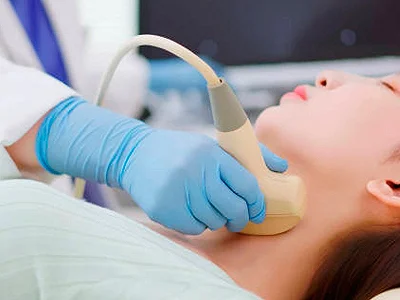
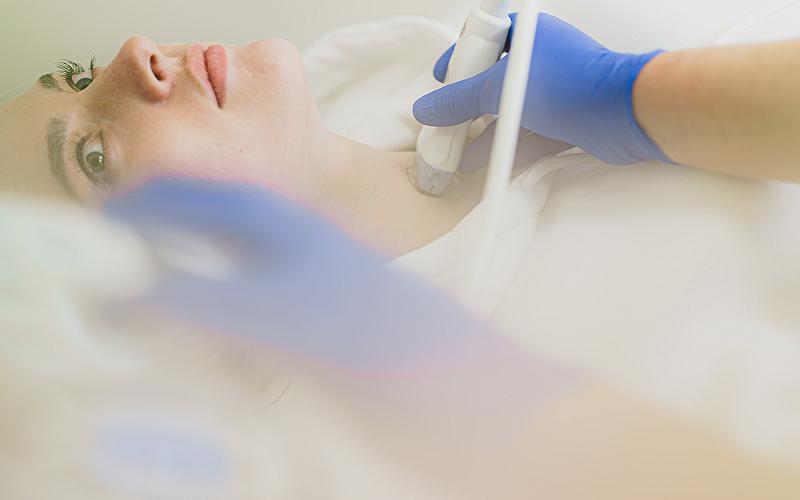
Many patients wonder what a lymph node ultrasound looks like and what to expect in the doctor's office. In practice, it is a completely painless and comfortable procedure. First, the patient lies down on the examination table, after which the specialist applies a clear gel to the area being examined and smoothly glides the transducer across the skin. A black-and-white image immediately appears on the monitor. The doctor clearly observes the outlines of the structures, their internal architecture, and real-time vascular flow parameters.
During the examination, the specialist carefully evaluates and records the following details in the medical report:
With these detailed results, you can immediately consult a specialist (internist, surgeon, ENT specialist, or endocrinologist) to initiate a targeted treatment plan without losing valuable time.
The body signals when pathological processes develop within. It is advisable to evaluate the lymphatic system upon noticing the following symptoms:
These microscopic biological filters are distributed throughout the body for a reason. They form regional clusters near vulnerable anatomical zones. Cervical, submandibular, axillary, and inguinal nodes are the first to react when viruses or bacteria infiltrate adjacent tissues. Their enlargement is not an isolated disease, but an indicator of an active immune response, making comprehensive evaluation essential. A professional lymph node ultrasound helps rule out serious pathologies, determine the nature of inflammation, and identify the root cause of the condition.
Ultrasound diagnostics is recognized as one of the safest medical imaging methods. It involves no ionizing radiation, meaning there are virtually no contraindications. The procedure can be safely performed on young children, elderly patients, and pregnant women at any stage of gestation.
The only temporary limitation involves extensive epidermal damage, open wounds, or fresh burns directly in the area where the transducer must be placed. In such instances, the examination should be scheduled once the skin has healed.
A key benefit of this method is the absence of demanding pre-exam restrictions. Specialized preparation for a lymph node ultrasound is not required. Unlike an abdominal scan, there is no need for dietary changes or hours of fasting.
Simply wear comfortable clothing that can easily be unbuttoned or removed to expose the area being evaluated (such as the neck or armpits). Bringing prior imaging reports, if available, helps the physician assess structural changes over time.
Tip: on the day of an axillary node examination, avoid using deodorants, antiperspirants, creams, or oils, as they leave a greasy film that impairs smooth probe movement over the skin.
The entire visit takes only 15–20 minutes and proceeds in a quiet, comfortable setting. The doctor focuses on the specific anatomical zone without overlooking any key detail. Throughout the scan, the specialist evaluates clinical parameters to build an objective health profile.
The diagnostic process consists of several clear steps:
During the exam, the physician checks organ contours, internal architecture, tissue uniformity, and dimensions. Advanced software enables color Doppler imaging alongside structural assessment. This allows the specialist to examine blood flow dynamics, velocity, and the vascular network supplying the node, which is crucial for ruling out occult proliferative processes.
We believe professional diagnostic care should remain transparent in cost. At the “Lekarze w Warszawie” medical center, lymph node ultrasound pricing is fixed with no hidden fees.
The final cost depends strictly on the number of anatomical regions assessed (for instance, cervical nodes alone or a comprehensive evaluation of multiple groups). You can always check our current price list with our receptionists when booking.
Our facility provides optimal conditions for fast, accurate, and stress-free diagnostics. The modern lymph node ultrasound department is equipped with expert-tier ultrasound scanners that detect microstructural tissue changes measuring just a few millimeters. Patients choosing our center also benefit from:
We value your time, scheduling appointments to eliminate waiting lines and providing full written reports with digital image prints right after the exam.
There is no need to delay diagnostic care or postpone your health. If you are looking for a reliable, prompt lymph node ultrasound in Warsaw without waiting lines, the doors of the “Lekarze w Warszawie” medical center are open. Call us or complete the brief form on our website to schedule your visit. We welcome patients Monday through Sunday, including evening hours.
Lymph nodes are small, bean-shaped or rounded biological filters distributed throughout the body. Their primary task is filtering lymph fluid to capture bacteria, viruses, toxins, and abnormal cells. Additionally, they produce immune cells to fight off infections.
A lymph node ultrasound is completely painless. The only sensations during the scan are the smooth probe moving across the skin and the cool temperature of the medical gel. Even if a node is enlarged or tender, the physician guides the transducer gently to prevent discomfort.
At our medical center, this examination is available privately without a referral from a primary care physician. If you experience concerning symptoms, you can book an appointment directly, receive an expert report, and present it to an internist, surgeon, or endocrinologist for further consultation.
Manual palpation only allows a doctor to approximate the size and superficial firmness of a node. A detailed lymph node ultrasound reveals its internal architecture, inflammatory fluid presence, border regularity, and vascular flow patterns. This information is vital for distinguishing a typical reactive process from serious occult pathologies in time.
We care for your health with full commitment and professionalism.
Thyroid Ultrasound
zł 250.00
Genitourinary ultrasound
zł 250.00
"3 Ultrasound Scans" Package (excluding heart and vessels)
zł 600.00
"2 Ultrasound Scans" Package (excluding heart and vessels)
zł 450.00
Abdominal ultrasound
zł 270.00
Salivary gland ultrasound
zł 280.00
Lung ultrasound
zł 270.00
Ultrasound package: Abdomen + urinary tract
zł 410.00
Genitourinary ultrasound
zł 250.00
Soft tissue ultrasound (2 areas)
zł 230.00
Lymph node group ultrasound (1 area)
zł 290.00
Thyroid ultrasound
zł 250.00
Behind the success of our clinic are experienced doctors – experts in their fields who combine knowledge, passion, and an individual approach to the patient.
What our clients say about us
Nina Zastavna

We had an ultrasound done for my five-year-old daughter, and everything went great. The staff's approach was simply wonderful; the child felt safe and wasn't afraid. I definitely recommend it.
Xenia Andrushchenko
I was there for an ultrasound - the doctor was very attentive, she checked everything thoroughly and calmly. I recommend!
Sviatlana Areshchankova
I would like to thank the doctors very much for your work! I liked everything. I highly recommend them.
We have answers to all questions
No, a referral is not required. It is enough to make an appointment for the examination by phone or online.
No. The ultrasound examination is completely painless, safe, and non-invasive — it can be performed repeatedly.
It usually takes from 10 to 30 minutes, depending on the area being examined.
Preparation depends on the type of examination. In case of doubt, our staff will be happy to explain how to best prepare for a specific ultrasound.
Ultrasound results are available immediately after the examination — the doctor discusses them right away during the visit.
We perform, among others, ultrasound of the abdomen, genitourinary system, thyroid, soft tissues, lymph node groups, and others.


.jpg)